
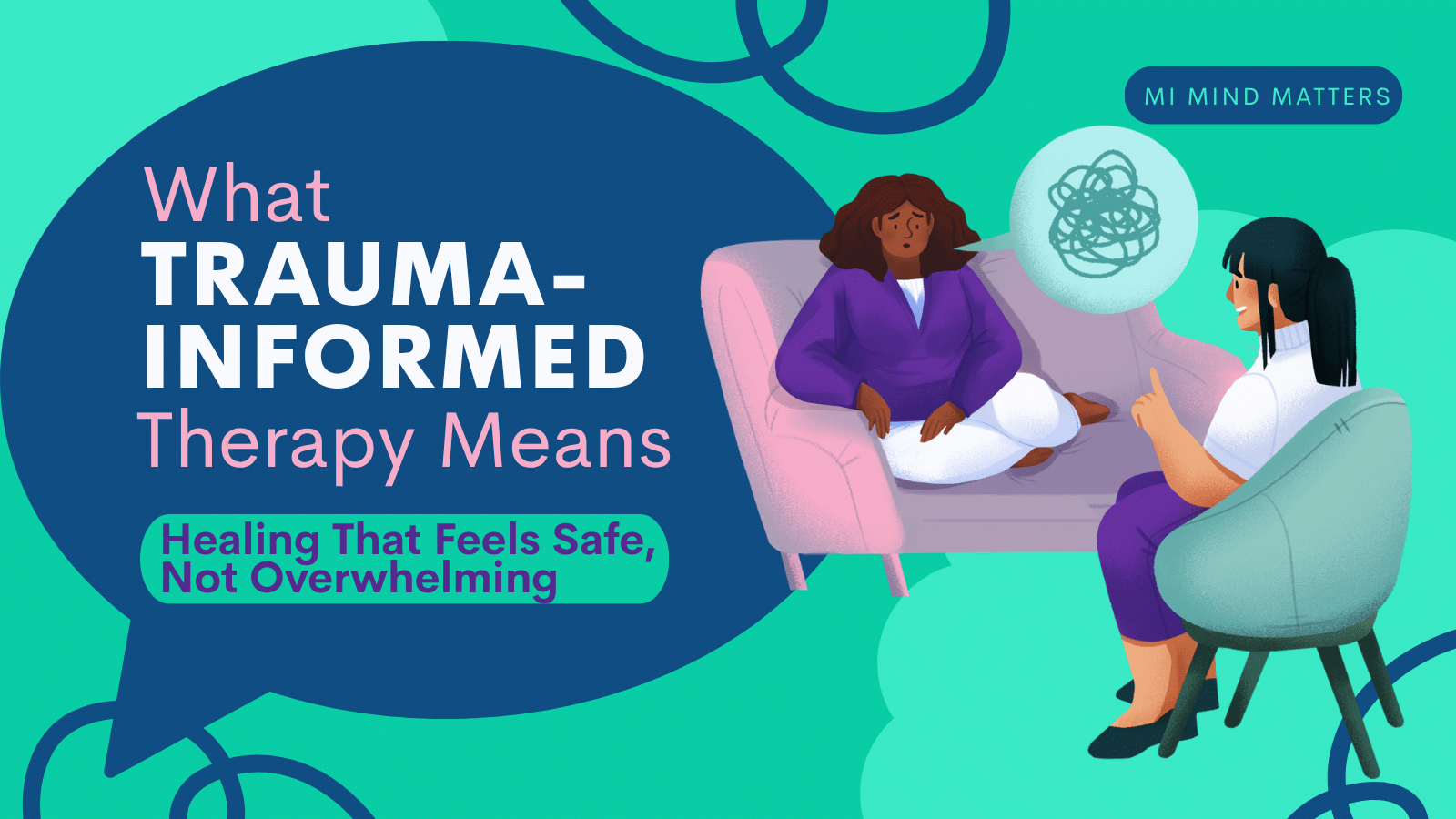
Healing That Feels Safe, Not Overwhelming
If you have ever considered therapy but felt unsure, hesitant, or even afraid to start, you are not alone. For many people, especially those with past trauma, walking into therapy can feel like stepping into the unknown.
That is where trauma-informed therapy comes in.
Rather than asking, “What is wrong with you?” trauma-informed therapy gently shifts the lens to:
“What happened to you and how can we support your healing safely?”
This approach recognizes that trauma can shape how we think, feel, and respond to the world and it prioritizes safety, trust, and empowerment every step of the way.
What Is Trauma-Informed Therapy?
Trauma-informed therapy is an approach to mental health care that understands the widespread impact of trauma and actively works to avoid re-traumatization.
It is not just a specific technique, it is a framework that guides how therapy is provided.
A trauma-informed therapist:
- Recognizes the signs and effects of trauma
- Understands how trauma impacts the brain and body
- Creates a safe and supportive environment
- Respects your pace and boundaries
- Empowers you to have control in your healing process
This approach is especially important for individuals who have experienced:
- Childhood emotional neglect or abuse
- Toxic or abusive relationships
- Religious trauma
- First responder or military-related trauma
- Chronic stress or long-term adversity
Key Principles of Trauma-Informed Therapy
Trauma-informed therapy is built on several core principles. Think of these as the “emotional architecture” of a safe therapeutic space 🧩
- Safety
Emotional and physical safety come first.
This means:
- You are not pressured to share before you are ready
- Sessions feel predictable and supportive
- Your therapist checks in with your comfort level
Safety is not assumed. It is actively created.
- Trust and Transparency
Therapy should not feel confusing or unpredictable.
A trauma-informed therapist:
- Explains the process clearly
- Sets expectations collaboratively
- Is open about techniques and goals
This builds a sense of stability and trust, which trauma can often disrupt.
- Choice and Control
Trauma often involves a loss of control. Therapy should restore it.
You are always:
- Allowed to say no
- Invited to guide the pace
- Encouraged to share feedback
Healing works best when you are in the driver’s seat 🚗
- Collaboration
You and your therapist are a team, not a hierarchy.
Rather than being told what to do, you are:
- Actively involved in decisions
- Heard and respected
- Treated as the expert of your own experience
- Empowerment
Trauma can leave people feeling broken or powerless. Trauma-informed therapy focuses on:
- Building strengths
- Increasing self-awareness
- Restoring confidence
The goal is not just symptom relief, it is helping you feel capable and whole again.
How Trauma Affects the Mind and Body
Trauma is not just a memory; it is something your body can hold onto.
When you have experienced trauma, your nervous system may stay on high alert, as if danger is still present. This can lead to:
- Anxiety or panic
- Difficulty trusting others
- Emotional numbness
- Irritability or anger
- Trouble sleeping
- Flashbacks or intrusive thoughts
Even if the trauma happened years ago, your body may still be trying to protect you.
Trauma-informed therapy understands this and works to regulate the nervous system, not just talk through the past.
What to Expect in Trauma-Informed Therapy
No two therapy experiences are the same but trauma-informed care tends to feel different in important ways.
Here’s what you can expect:
A Slower, More Intentional Pace
You won’t be rushed into discussing painful experiences. Therapy moves at a pace that feels manageable.
Focus on Coping Skills First
Before processing trauma, many therapists help you build tools like:
- Grounding techniques
- Emotional regulation skills
- Stress management strategies
Body Awareness
You may explore how emotions show up physically and learn ways to calm your nervous system.
Evidence-Based Approaches
Trauma-informed therapists often use modalities such as:
- EMDR (Eye Movement Desensitization and Reprocessing)
- Cognitive Behavioral Therapy (CBT)
- Somatic-based approaches
- Mindfulness techniques
Who Can Benefit from Trauma-Informed Therapy?
You do not need to have a formal PTSD diagnosis to benefit from this approach.
Trauma-informed therapy can help if you:
- Feel stuck in patterns you do not understand
- Struggle with anxiety, depression, or emotional overwhelm
- Have difficulty trusting others
- Experience triggers that seem to come “out of nowhere”
- Grew up in an unpredictable or emotionally unsafe environment
In truth, many people carry forms of trauma that go unrecognized. Trauma-informed therapy meets you exactly where you are.
Why Trauma-Informed Therapy Matters
Traditional approaches to therapy can sometimes unintentionally feel overwhelming or invalidating for trauma survivors.
Trauma-informed care helps prevent that by:
- Reducing the risk of re-traumatization
- Building a strong, trusting therapeutic relationship
- Supporting long-term, sustainable healing
It is not about “fixing” you.
It is about creating the conditions where healing becomes possible 🌱
Finding Trauma-Informed Therapy in Michigan
If you are looking for trauma-informed therapy in Michigan, it is important to find a provider who:
- Has experience working with trauma
- Uses evidence-based approaches
- Prioritizes safety and collaboration
- Offers both in-person and telehealth options
At Mi Mind Matters, we provide trauma-informed therapy for adults across Michigan, including in-person sessions in Grand Blanc and secure telehealth statewide.
We specialize in working with individuals navigating:
- Trauma and PTSD/C-PTSD
- Anxiety and chronic stress
- Life transitions and emotional overwhelm
Healing Does Not Have to Feel Overwhelming
Healing from trauma is not about forcing yourself to relive the past; it is about feeling safe enough to process it at your own pace.
Trauma-informed therapy offers a different kind of experience:
one that is gentle, respectful, and deeply empowering.
If you have been unsure about starting therapy, this approach may be exactly what you need to take that first step.
If you are ready to begin your healing journey, we are here to support you.
👉 Visit www.MiMindMatters.com to learn more or schedule an appointment
📍 In-person therapy in Grand Blanc, Michigan
💻 Telehealth available statewide across Michigan