
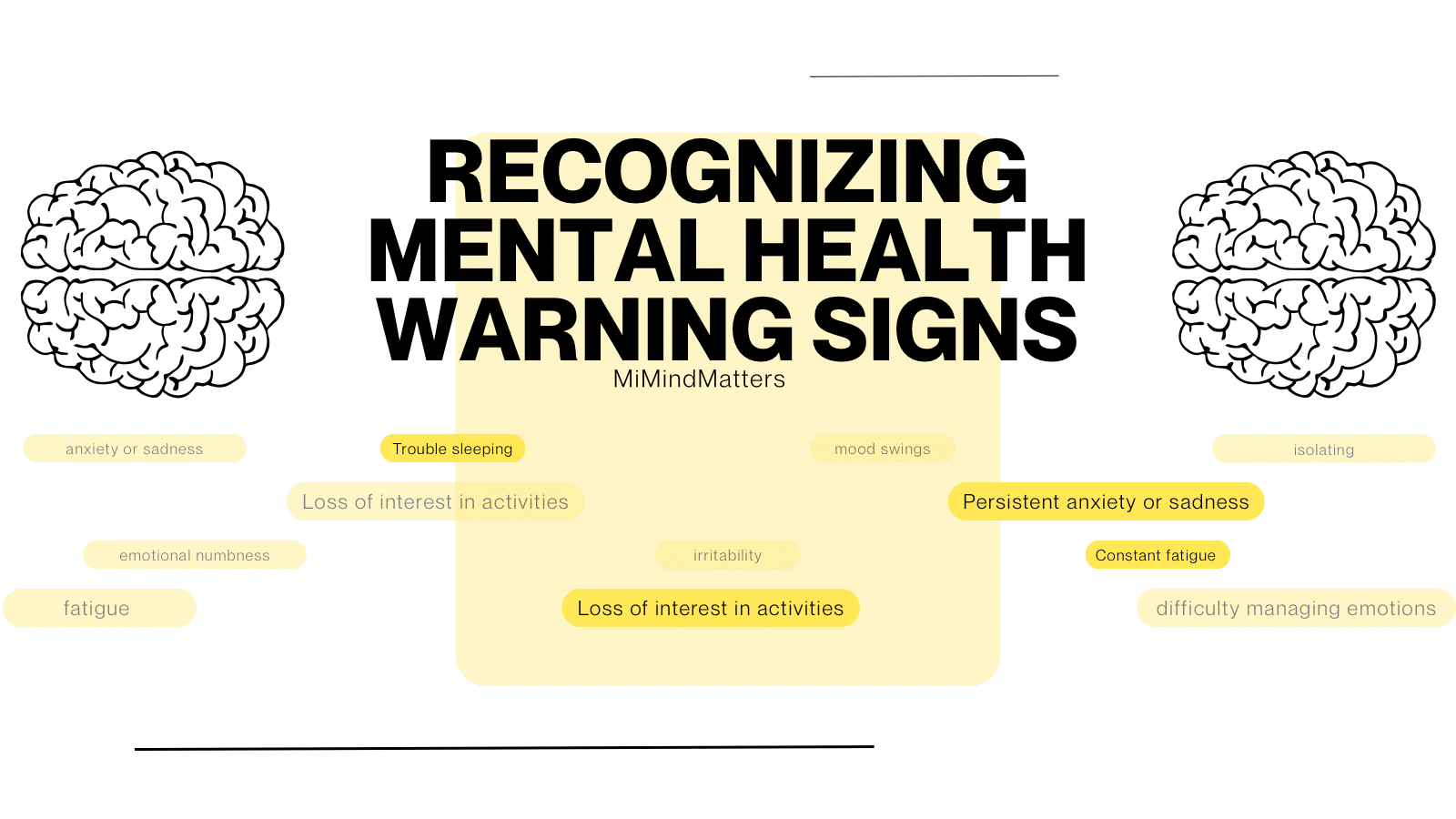
Recognizing Mental Health Warning Signs
Mental health struggles rarely appear overnight like a lightning strike across a clear sky. More often, they arrive quietly. A shift in mood. Increased irritability. Trouble sleeping. Pulling away from friends. Feeling emotionally exhausted by things that once felt manageable.
Many people ignore these changes at first. They tell themselves they are “just stressed,” “just tired,” or “just going through a phase.” But emotional distress often leaves clues long before a crisis develops.
Recognizing mental health warning signs early can make a significant difference in overall well-being, relationships, physical health, and quality of life. Early support can help prevent symptoms from becoming more severe and can create space for healing, stability, and growth.
At Mi Mind Matters, we believe mental health deserves the same attention and care as physical health. Just as you would not ignore persistent chest pain or a high fever, emotional warning signs should not be dismissed simply because they are invisible.
Why Mental Health Warning Signs Matter
Mental health affects how we think, feel, behave, connect with others, and cope with daily life. When emotional distress goes unaddressed, it can impact nearly every area of functioning, including:
- Relationships
- Work performance
- Parenting
- Physical health
- Sleep
- Motivation
- Concentration
- Self-esteem
- Decision-making
Many mental health conditions become easier to treat when symptoms are identified early. Recognizing warning signs is not about labeling people. It is about increasing awareness and reducing shame so people can access support sooner.
Common Mental Health Warning Signs
Mental health symptoms can look different from person to person, but there are several common warning signs that may indicate someone is struggling emotionally.
Persistent Sadness or Emotional Numbness
Everyone experiences sadness occasionally. However, ongoing sadness, emptiness, hopelessness, or emotional numbness may be signs of depression or emotional burnout.
Someone may:
- Cry more frequently
- Feel disconnected from others
- Lose interest in activities they once enjoyed
- Describe feeling “stuck” or emotionally flat
- Feel hopeless about the future
Sometimes depression does not look like sadness at all. It can show up as irritability, exhaustion, anger, or simply feeling emotionally shut down.
Increased Anxiety or Constant Worry
Anxiety often feels like a mind that refuses to power down. Thoughts race in endless loops, scanning for danger even during moments of safety.
Common anxiety warning signs include:
- Excessive worrying
- Restlessness
- Panic attacks
- Difficulty relaxing
- Trouble sleeping
- Racing thoughts
- Muscle tension
- Feeling overwhelmed by everyday tasks
Some people experience physical symptoms such as stomach issues, headaches, dizziness, chest tightness, or rapid heartbeat.
Changes in Sleep Patterns
Sleep and mental health are deeply connected. Emotional distress often disrupts sleep long before people recognize what is happening emotionally.
Warning signs may include:
- Insomnia
- Frequent waking
- Sleeping excessively
- Nightmares
- Difficulty falling asleep because of racing thoughts
- Feeling exhausted even after resting
Chronic sleep disruption can intensify anxiety, depression, and emotional reactivity, creating a difficult cycle.
Withdrawal From Family, Friends, or Activities
People who are struggling emotionally often begin pulling away from others. Social withdrawal may happen gradually and can sometimes be mistaken for simply “being busy.”
Warning signs include:
- Cancelling plans frequently
- Avoiding phone calls or texts
- Isolating at home
- Reduced communication
- Losing interest in hobbies or social events
Isolation can increase feelings of loneliness and make symptoms worse over time.
Difficulty Managing Emotions
Mental health struggles can affect emotional regulation. Some people feel emotions intensely, while others feel emotionally detached.
This may appear as:
- Increased irritability
- Anger outbursts
- Mood swings
- Feeling emotionally overwhelmed
- Crying easily
- Feeling emotionally numb
- Difficulty coping with stress
When the nervous system remains in survival mode for long periods, emotions can begin to feel unpredictable or exhausting.
Physical Signs of Emotional Distress
Mental health symptoms are not “all in your head.” Emotional stress frequently impacts the body.
Common physical warning signs include:
- Headaches
- Fatigue
- Muscle tension
- Digestive issues
- Appetite changes
- Chronic pain
- Increased illness due to stress
- Difficulty concentrating
The body often whispers before it screams. Emotional distress may show up physically when emotions have been suppressed or ignored for too long.
Warning Signs in Teens and Children
Mental health warning signs in children and teens may look different than they do in adults. Young people often express emotional distress through behavior rather than words.
Teenagers especially may struggle to explain what they are feeling. Emotional pain sometimes hides behind sarcasm, silence, defiance, or perfectionism.
Trauma Can Change How Mental Health Symptoms Appear
For individuals with trauma histories, mental health warning signs can feel especially confusing. Trauma often affects the nervous system, emotional regulation, relationships, and sense of safety.
Signs of unresolved trauma may include:
- Hypervigilance
- Emotional numbness
- Difficulty trusting others
- Panic reactions
- Avoidance
- Dissociation
- Chronic shame
- Feeling constantly “on edge”
- Overreacting to stress
- Difficulty feeling safe even in calm situations
Complex trauma (C-PTSD) can make people feel as though they are constantly surviving rather than fully living.
Trauma responses are not character flaws. They are adaptive survival responses that developed during difficult experiences.
When Should Someone Seek Therapy?
Many people wait until symptoms become severe before reaching out for support. Therapy does not have to be a “last resort.”
It may help to seek support if:
- Symptoms interfere with daily life
- Stress feels unmanageable
- Relationships are being affected
- Emotional distress feels persistent
- Coping strategies are no longer working
- Trauma symptoms are impacting functioning
- You feel emotionally exhausted or disconnected
- You want support understanding your emotions
Therapy can provide a space to process experiences, build coping skills, improve emotional regulation, and better understand patterns that may be contributing to distress.
How Therapy Can Help
Therapy is not about “fixing” people. It is about creating safety, insight, connection, and healthier ways of coping.
At Mi Mind Matters, we provide trauma-informed therapy for adults experiencing:
- Anxiety
- Depression
- Trauma and PTSD/C-PTSD
- Stress and burnout
- Life transitions
- Emotional overwhelm
- Relationship challenges
Treatment approaches may include:
- EMDR therapy
- Cognitive Behavioral Therapy (CBT)
- Motivational Interviewing
- Psychoeducation
- Supportive psychotherapy
- Trauma-informed interventions
Whether someone is struggling with long-term emotional pain or simply noticing early warning signs, support can help prevent symptoms from growing heavier over time.
You Do Not Have to Wait Until Things Fall Apart
Many people believe they must reach a breaking point before asking for help. But mental health support is not reserved only for crisis situations.
Sometimes healing begins with simply noticing:
- “I do not feel like myself lately.”
- “I feel emotionally exhausted.”
- “I am struggling more than usual.”
- “Something feels off.”
Those moments of awareness matter.
Mental health challenges are deeply human. Seeking support is not weakness. It is responsiveness to your own well-being, like turning toward a flickering dashboard light before the engine overheats completely.
Mental Health Support in Michigan
Mi Mind Matters provides trauma-informed individual therapy for adults in Grand Blanc, Michigan, and telehealth counseling for individuals throughout Michigan.
If you have been noticing mental health warning signs in yourself or someone you care about, support is available. Early intervention can help create healthier coping patterns, emotional stability, and long-term healing.