
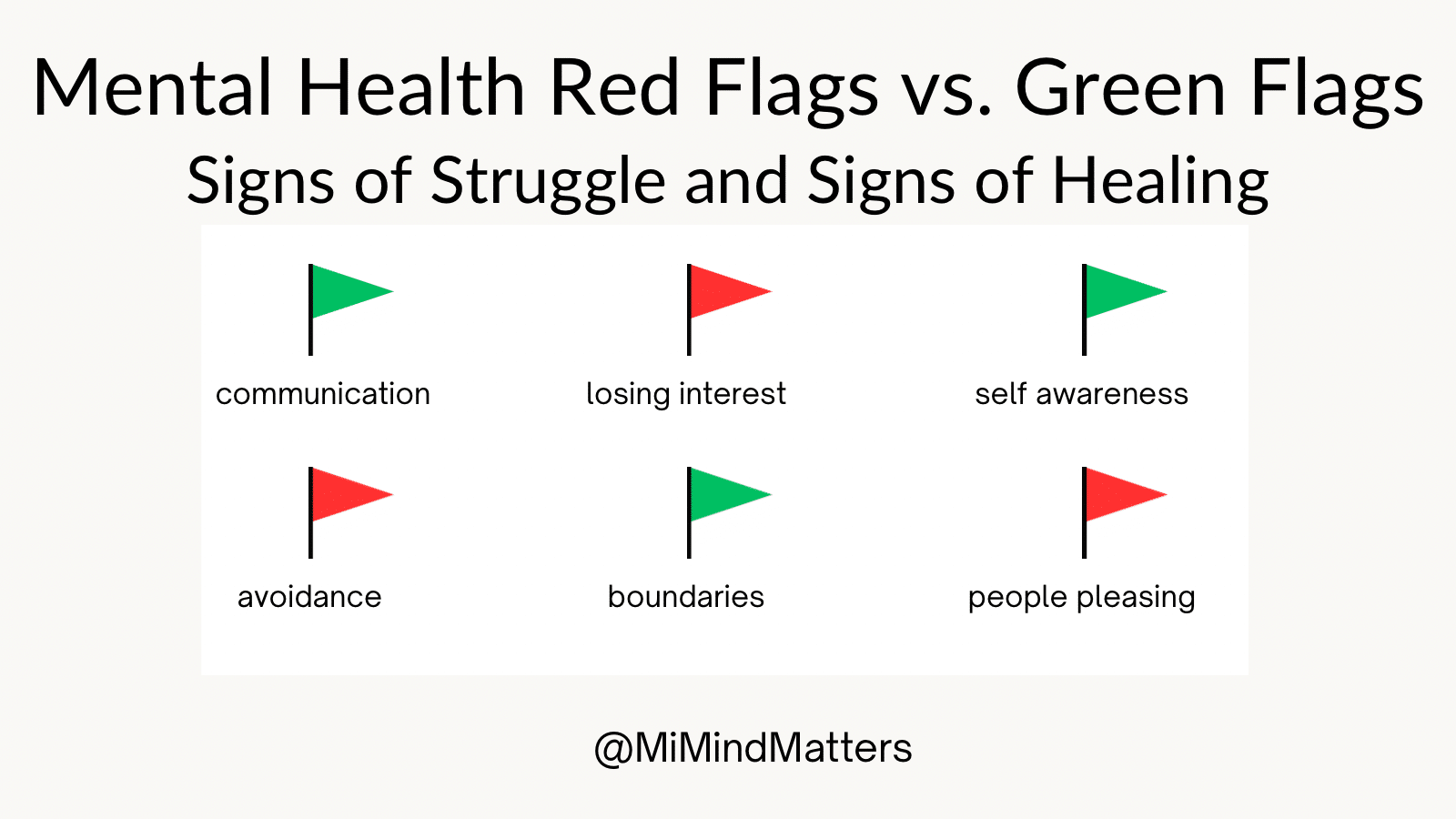
Signs of Struggle and Signs of Healing
When people hear the phrase “red flags,” they often think about relationships. But red flags can also show up in our emotional health, coping patterns, stress levels, and everyday functioning. Just as important, though, are the green flags… the signs that healing, growth, and emotional wellness are taking root 🌱
Mental health is rarely all good or all bad. Most people experience a mix of both warning signs and healthy behaviors at different times in life. The goal is not perfection. The goal is awareness.
Understanding mental health red flags versus green flags can help you recognize when additional support may be needed and also help you celebrate the progress you may already be making.
What Are Mental Health Red Flags?
Mental health red flags are signs that emotional distress, unhealthy coping patterns, or psychological struggles may be interfering with daily life.
Sometimes these signs appear suddenly after a stressful event. Other times, they build slowly over time like emotional “background static” until it becomes difficult to ignore.
Red flags do not mean someone is “broken” or failing. They are signals that the mind and body may need attention, support, rest, or professional help.
Common Mental Health Red Flags
Constant Emotional Exhaustion
Feeling emotionally drained all the time can indicate chronic stress, burnout, anxiety, depression, or unresolved trauma.
This may look like:
- Feeling overwhelmed by simple tasks
- Difficulty getting motivated
- Emotional numbness
- Irritability or frequent frustration
- Feeling mentally “checked out”
Avoiding Everything
Avoidance is a common signs of emotional distress.
This can include avoiding:
- Phone calls or texts
- Social situations
- Difficult conversations
- Work responsibilities
- Medical appointments
- Emotions themselves
Avoidance may bring temporary relief, but over time it often increases anxiety and emotional overwhelm.
Negative Self-Talk
The inner voice matters.
If your thoughts sound constantly critical, hopeless, or harsh, this may be a mental health red flag.
Examples include:
- “I’m a burden.”
- “Nothing will ever get better.”
- “I always ruin everything.”
- “I’m not good enough.”
Over time, negative self-talk can deeply impact self-esteem, relationships, and emotional well-being.
Difficulty Regulating Emotions
Everyone experiences strong emotions sometimes. But frequent emotional extremes may signal deeper stress or unresolved trauma.
This might include:
- Explosive anger
- Panic attacks
- Shutting down emotionally
- Crying frequently
- Feeling emotionally reactive all the time
Losing Interest in Things You Used to Enjoy
One of the most overlooked warning signs is emotional withdrawal from hobbies, relationships, or activities that once felt meaningful.
When someone stops enjoying the things that previously brought connection or comfort, it may indicate depression, burnout, or emotional overload.
People-Pleasing
Many people assume being “too nice” is harmless. But chronic people-pleasing can become emotionally exhausting and may reflect:
- Fear of conflict
- Low self-worth
- Anxiety
- Trauma responses
- Difficulty setting boundaries
When someone consistently ignores their own needs to avoid disappointing others, emotional burnout often follows.
What Are Mental Health Green Flags?
Green flags are signs of emotional growth, self-awareness, healthy coping, and resilience.
These signs often develop gradually and may not always feel dramatic. Healing frequently looks less like a movie transformation and more like small, steady emotional shifts over time.
Green flags are important because they remind us that progress is happening, even when life is still stressful.
Common Mental Health Green Flags
Being Able to Communicate Feelings
Healthy emotional expression is a major green flag.
This does not mean someone communicates perfectly all the time. It means they are becoming more aware of their emotions and learning to express them in healthier ways.
Examples include:
- Saying “I’m overwhelmed” instead of shutting down
- Asking for support
- Expressing needs clearly
- Having difficult conversations respectfully
Setting Boundaries Without Excessive Guilt
Boundaries protect emotional energy and mental health.
A strong green flag is recognizing that:
- Saying no is healthy
- Rest is productive
- Protecting your peace is not selfish
Boundaries may feel uncomfortable at first, especially for people with trauma histories or chronic people-pleasing patterns. But learning to set them is often part of healing.
Increased Self-Awareness
Self-awareness helps people notice patterns instead of automatically reacting to them.
Green flag thoughts might sound like:
- “I notice I’m getting triggered.”
- “I need a break.”
- “This situation reminds me of past experiences.”
- “I’m starting to understand why I react this way.”
Awareness creates space for healthier choices.
Using Healthy Coping Skills
Healthy coping does not mean never struggling. It means developing tools that support emotional regulation rather than creating more harm.
Examples include:
- Journaling
- Grounding exercises
- Therapy
- Exercise
- Talking to trusted people
- Mindfulness
- Taking breaks when overwhelmed
Healthy coping skills are like emotional shock absorbers. They do not remove every bump in the road, but they help soften the impact.
Feeling Safe Enough to Be Authentic
A powerful green flag is no longer feeling the need to hide every emotion, opinion, or struggle.
Healing often involves:
- Becoming more genuine
- Feeling safer being yourself
- Letting go of perfectionism
- Accepting that vulnerability is human
Repairing Instead of Avoiding
Healthy relationships are not conflict-free. They involve repair.
A major green flag is the ability to:
- Take accountability
- Apologize sincerely
- Work through misunderstandings
- Communicate after conflict instead of disappearing
Repair builds trust and emotional safety.
Red Flags and Green Flags Can Exist at the Same Time
Here is something important many people forget:
You can have red flags and green flags simultaneously.
Someone may still struggle with anxiety while also improving their boundaries. A person healing from trauma may still experience emotional triggers while becoming more self-aware and emotionally resilient.
Healing is rarely linear. It often looks more like climbing a mountain during Michigan weather. ☁️ One minute there is sunshine, the next minute sideways emotional hail, and somehow you are still moving forward.
Progress matters even when struggles still exist.
When to Seek Professional Support
If mental health red flags are interfering with daily functioning, relationships, work, or emotional well-being, therapy can help.
A mental health professional can help individuals:
- Understand emotional patterns
- Process trauma
- Improve coping skills
- Reduce anxiety and depression symptoms
- Build healthier relationships
- Strengthen emotional regulation
- Increase self-esteem and self-awareness
Therapy is not only for crisis situations. Many people seek therapy simply because they want to better understand themselves and create healthier emotional patterns.
Mental health awareness is not about judging yourself. It is about noticing patterns with honesty and compassion.
Red flags are signals that something may need attention. Green flags are reminders that healing and growth are possible.
Even small changes matter:
- Taking a break when overwhelmed
- Speaking kindly to yourself
- Setting one healthy boundary
- Asking for support
- Attending therapy consistently
Those moments may seem small, but they are often where healing quietly begins.
If you are struggling, you do not have to navigate it alone.
At Mi Mind Matters, we provide trauma-informed therapy for adults throughout Michigan through in-person and telehealth counseling services.