
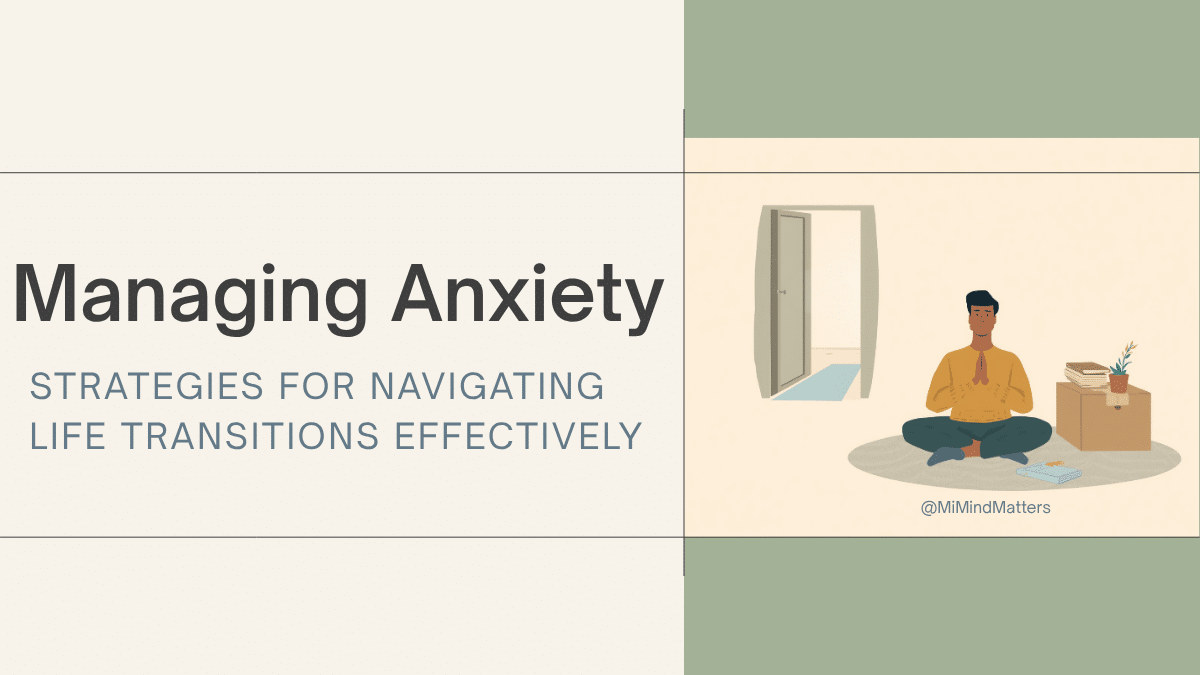
Life is always changing. Some changes are planned and exciting. Others happen without warning. Even a positive change can bring stress, worry, and fear.
You may feel anxious when starting a new job, moving, getting married, becoming a parent, ending a relationship, or retiring. You may also struggle during changes involving your health, family, finances, or identity.
Feeling anxious during a major change does not mean you are weak or making the wrong choice. Change creates uncertainty. Your mind and body may need time to adjust.
Learning how to manage anxiety during life transitions can help you feel more grounded, confident, and prepared for what comes next.
What Is a Life Transition?
A life transition is a major change that affects your daily life, relationships, responsibilities, or sense of self. It often marks the end of one stage and the beginning of another.
Common life transitions include:
- Starting or losing a job
- Moving to a new home or community
- Beginning or ending a relationship
- Getting married or divorced
- Becoming a parent
- Children leaving home
- Starting college or graduating
- Experiencing changes in physical health
- Caring for an aging parent
- Losing someone you love
- Entering retirement
- Changing careers
- Returning to civilian life after military service
- Adjusting after a traumatic event
Some transitions are chosen. Others are not. Both types can lead to anxiety.
Even when you want a change, you may still miss what you are leaving behind. You can feel hopeful about the future and sad about the past at the same time.
Why Do Life Transitions Cause Anxiety?
Your brain likes patterns. Familiar routines help your brain know what to expect. When life changes, those patterns may disappear.
You may not know what will happen next. You may wonder whether you made the right decision or whether you will be able to handle your new situation. Your mind may try to protect you by thinking about every possible problem.
This can lead to questions such as:
- What if I fail?
- What if I regret my decision?
- What if things do not work out?
- What if I cannot handle this?
- What if I lose an important relationship?
- What if my life never feels normal again?
These thoughts may make the future seem more dangerous than it is. Anxiety can also cause you to doubt yourself, avoid decisions, or feel like you must solve everything at once.
Signs of Anxiety During a Life Transition
Anxiety does not look the same for everyone. It can affect your thoughts, emotions, body, and behavior.
Common signs include:
- Constant worry
- Racing thoughts
- Trouble making decisions
- Feeling restless or on edge
- Trouble sleeping
- Headaches or muscle tension
- A fast heartbeat
- Stomach problems
- Feeling tired or overwhelmed
- Difficulty focusing
- Irritability
- Avoiding people or responsibilities
- Seeking frequent reassurance
- Expecting the worst to happen
- Feeling unable to relax
You may also feel disconnected from yourself. A major change can affect how you see your role, purpose, or identity.
For example, you may wonder who you are after a divorce, career change, loss, or retirement. These questions can feel uncomfortable, but they can also be a normal part of adjusting.
Positive Changes Can Cause Anxiety Too
People often expect difficult events to cause anxiety. However, positive changes can also feel stressful.
A promotion may bring more responsibility. Moving into a new home may create financial worry. Getting married may bring changes in routines and family roles. Becoming a parent may include joy, fear, exhaustion, and self-doubt.
You may then feel guilty for being anxious about something you wanted.
Try not to judge yourself. Your nervous system responds to change, not only to bad events. Excitement and anxiety can also feel similar in the body. Both may cause a fast heartbeat, tense muscles, or trouble sleeping.
Anxiety does not mean you are ungrateful. It may simply mean that your mind and body are adjusting.
How to Manage Anxiety During Life Transitions
You may not be able to remove all uncertainty. You can, however, learn how to respond to it in a healthier way.
- Name What You Are Feeling
Pause and identify your emotions. You may be feeling more than anxiety.
You might also feel:
- Sadness
- Anger
- Grief
- Relief
- Excitement
- Guilt
- Confusion
- Hope
- Loneliness
Naming an emotion can make it feel less overwhelming. Instead of thinking, “Everything is falling apart,” you might say, “I feel nervous because I do not know what to expect.”
This small change helps separate a feeling from a fact.
- Focus on What You Can Control
Life transitions often include many things you cannot control. Focusing on all of them can increase anxiety.
Divide your concerns into two groups:
Things I can control:
- How I care for myself
- Who I ask for help
- The information I gather
- The boundaries I set
- The next small action I take
Things I cannot control:
- Other people’s reactions
- Every possible outcome
- The past
- Unexpected delays
- Whether everyone understands my choices
Give more attention to the things you can control. This can help you use your energy in ways that support you.
- Break the Transition Into Smaller Steps
A major change can feel impossible when you look at the entire situation at once.
Ask yourself, “What is the next helpful step?”
Your next step might be making one phone call, completing one form, packing one box, or writing down your questions. Once that is done, choose another small step.
You do not need to have the entire future planned today.
- Keep a Simple Routine
Change may interrupt your normal schedule. A basic routine can give your brain a sense of safety and structure.
Try to:
- Wake up and go to bed around the same time
- Eat regular meals
- Make time for movement
- Take prescribed medication as directed
- Plan short breaks
- Limit alcohol and other substances
- Create a calming bedtime routine
Your routine does not need to be perfect. A few steady habits can help you feel more balanced.
- Calm Your Body
Anxiety is not only a thought. It is also a physical response. Calming your body can send your brain the message that you are safe in the present moment.
Try this breathing exercise:
- Breathe in slowly through your nose for four seconds.
- Pause briefly.
- Breathe out slowly for six seconds.
- Repeat for one or two minutes.
The longer exhale may help your body begin to relax.
You can also try stretching, walking, holding a warm drink, listening to calming music, or placing both feet firmly on the floor.
- Use a Grounding Exercise
Grounding brings your attention back to the present instead of letting anxiety pull you into the future.
Try the 5-4-3-2-1 exercise. Name:
- Five things you can see
- Four things you can feel
- Three things you can hear
- Two things you can smell
- One thing you can taste
You can use this exercise almost anywhere. It may be especially helpful when your thoughts begin to race.
- Notice “What If” Thoughts
Anxiety often speaks in “what if” questions.
“What if I fail?”
“What if I cannot adjust?”
“What if everything goes wrong?”
You do not have to argue with every thought. Instead, try answering with a more balanced statement:
- “I do not know what will happen, but I can handle one step at a time.”
- “This is difficult, but difficult does not mean impossible.”
- “I have adjusted to changes before.”
- “I can ask for help if I need it.”
- “I do not need to solve this today.”
The goal is not to force positive thinking. The goal is to think in a way that is fair, realistic, and helpful.
- Limit Information Overload
Research can help you prepare. Too much information can make anxiety worse.
You may find yourself searching online for hours, asking several people for advice, or thinking about every possible outcome. This can create more fear instead of more clarity.
Set a limit on how much time you spend researching or planning. Choose a few reliable sources. Then give yourself permission to take a break.
- Talk to Someone You Trust
Anxiety often feels heavier when you carry it alone.
Consider talking with a trusted friend, family member, mentor, support group, or therapist. You do not always need advice. Sometimes it helps to have someone listen without trying to fix the situation.
Be clear about what you need. You might say, “I do not need a solution right now. I just need someone to listen.”
- Make Space for Grief
Most transitions involve some type of loss. You may lose a routine, relationship, role, home, community, or earlier version of yourself.
This can be true even when the change is positive.
Allow yourself to acknowledge what you are leaving behind. You might write about it, talk about it, create a small ritual, or keep something meaningful from that stage of life.
Moving forward does not require pretending the past did not matter.
- Practice Self-Compassion
You may believe that you should be adjusting faster. You may compare yourself to people who seem more confident or successful.
Try speaking to yourself as you would speak to someone you care about.
Instead of saying, “I should be over this,” try:
- “I am going through a major change.”
- “It makes sense that I need time.”
- “I am learning as I go.”
- “I can be uncomfortable and still move forward.”
Adjustment is rarely a straight line. Some days will feel easier than others.
Create a Transition Coping Plan
A simple plan can help when anxiety feels intense.
Write down:
- The main change I am facing
- The part that worries me most
- What I can control today
- One small step I can take
- People I can contact for support
- Coping skills that help calm me
- A reminder I need to hear
Keep your plan somewhere easy to find. You may not be able to predict every challenge, but you can prepare ways to care for yourself.
When Does Anxiety Become a Problem?
Some anxiety is a normal response to change. It may become a concern when it is intense, lasts for a long time, or interferes with daily life.
Consider seeking professional support if anxiety is:
- Keeping you from sleeping
- Affecting your work or relationships
- Causing frequent panic attacks
- Making it difficult to complete daily tasks
- Leading you to avoid important situations
- Causing ongoing physical symptoms
- Leading to unhealthy coping behaviors
- Making you feel hopeless or unable to function
You do not have to wait until anxiety becomes severe before asking for help.
If you are having thoughts of harming yourself or feel that you cannot stay safe, call or text 988 in the United States for immediate crisis support. If there is an immediate danger, call 911 or go to the nearest emergency room.
How Therapy Can Help During Life Transitions
Therapy can provide a steady and supportive space while other parts of life are changing.
A therapist can help you:
- Understand what is causing your anxiety
- Challenge unhelpful thought patterns
- Learn grounding and coping skills
- Process grief and other emotions
- Set healthy boundaries
- Build confidence in your decisions
- Adjust to changes in your role or identity
- Create realistic plans for moving forward
Therapy does not remove every hard part of change. It can help you feel less alone and more prepared to face it.
You Do Not Have to Navigate Change Alone
Life transitions can bring fear, grief, excitement, and hope at the same time. These mixed emotions are normal.
You do not need to adjust perfectly or know exactly what comes next. Focus on the present, take small steps, and give yourself time.
If anxiety during a life transition is affecting your daily life, professional support may help. Mi Mind Matters offers compassionate therapy in Grand Blanc and online therapy for adults throughout Michigan. Contact us to learn more about getting support as you move through change and begin your next chapter.
Frequently Asked Questions About Anxiety and Life Transitions
Is it normal to feel anxious during a major life change?
Yes. Major changes create uncertainty and can interrupt familiar routines. Your brain and body may need time to adjust, even when the change is positive.
How long does it take to adjust to a life transition?
There is no set timeline. The length of adjustment depends on the type of change, the amount of support you have, past experiences, and other stress in your life. Try to focus on steady progress instead of a deadline.
Why do I feel anxious about a change I wanted?
Wanting a change does not remove uncertainty. Positive changes may bring new responsibilities, routines, and expectations. You can feel grateful and anxious at the same time.
Can life transitions trigger panic attacks?
Yes. High stress and uncertainty may increase panic symptoms for some people. A mental health professional can help you understand your symptoms and learn ways to manage them.
When should I see a therapist about a life transition?
Consider talking with a therapist if anxiety is affecting your sleep, work, relationships, health, or ability to complete daily tasks. You can also seek support before symptoms become severe.