
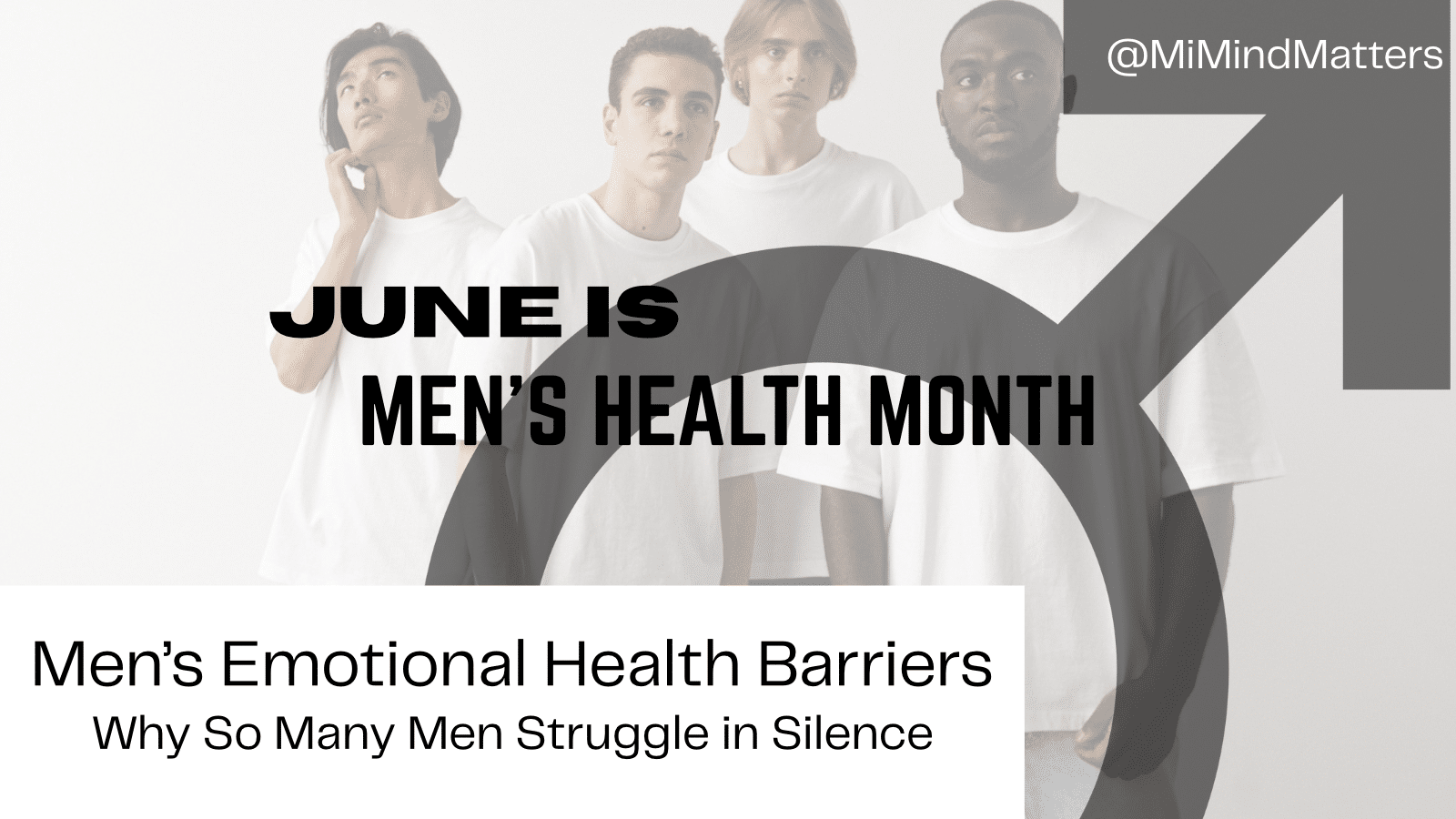
June is Men’s Health Month, a time dedicated to raising awareness about the physical, mental, and emotional well-being of men. While conversations about heart disease, cancer screenings, and physical fitness often take center stage, emotional health remains one of the most overlooked aspects of men’s overall wellness.
Many men experience anxiety, depression, trauma, grief, stress, and relationship difficulties, yet often hesitate to seek support. Cultural expectations, stigma, and long-standing beliefs about masculinity can create significant barriers to emotional health and healing.
Understanding these barriers is an important step toward changing the conversation and helping men access the support they deserve.
Why Emotional Health Matters
Emotional health influences nearly every aspect of life, including:
- Relationships
- Physical health
- Work performance
- Decision-making
- Stress management
- Self-esteem
- Overall quality of life
When emotional struggles go unaddressed, they can contribute to increased stress, burnout, substance misuse, anger, relationship conflict, sleep difficulties, and physical health concerns.
Emotional health is not about eliminating difficult feelings. It involves recognizing emotions, understanding their impact, and responding to them in healthy ways.
Common Emotional Health Barriers Men Face
“I Should Handle It Myself”
Many men are taught from an early age to be independent, self-reliant, and resilient. While these qualities can be strengths, they can also create the belief that asking for help is a sign of weakness.
As a result, men may:
- Minimize their struggles
- Avoid discussing emotions
- Delay seeking support
- Feel pressure to solve problems alone
The reality is that reaching out for support demonstrates self-awareness and courage, not weakness.
Social Expectations Around Masculinity
Traditional messages about masculinity often suggest that men should be:
- Strong
- Tough
- Emotionally controlled
- Independent
- Unaffected by stress
Unfortunately, these expectations can make it difficult for men to express vulnerability or seek help when they need it.
Many men report feeling more comfortable discussing physical pain than emotional pain because emotional struggles may feel inconsistent with how they believe they are expected to act.
Difficulty Identifying and Expressing Emotions
Some men grow up in environments where emotions are rarely discussed or modeled. Over time, this can make it difficult to recognize and communicate emotional experiences.
Instead of identifying feelings such as:
- Sadness
- Fear
- Disappointment
- Loneliness
- Shame
Emotional distress may appear as:
- Irritability
- Anger
- Withdrawal
- Risk-taking behaviors
- Overworking
- Substance use
Recognizing emotions is a skill that can be learned and strengthened over time.
Fear of Judgment
Many men worry about how others will perceive them if they talk openly about emotional struggles.
Common concerns include:
- “People will think I’m weak.”
- “I should be able to handle this.”
- “Others have it worse.”
- “I don’t want to burden anyone.”
These fears can prevent men from seeking support even when they are experiencing significant distress.
The reality is that emotional challenges are part of being human. Everyone experiences stress, loss, disappointment, and hardship at various points in life.
Trauma Often Goes Unrecognized
Many men have experienced traumatic events that continue to affect them long after the event has passed.
Trauma may stem from:
- Military service
- Law enforcement work
- First responder experiences
- Childhood adversity
- Emotional abuse
- Relationship trauma
- Accidents or injuries
- Sudden loss
Because trauma symptoms do not always look like what people expect, men may not realize their experiences are affecting them.
Signs of unresolved trauma can include:
- Hypervigilance
- Emotional numbness
- Anger outbursts
- Difficulty trusting others
- Sleep disturbances
- Anxiety
- Avoidance behaviors
Trauma is not a sign of weakness. It is a normal response to overwhelming experiences.
Prioritizing Everyone Else First
Many men feel responsible for supporting their families, partners, children, coworkers, or communities.
While caring for others is important, constantly putting personal needs aside can lead to:
- Emotional exhaustion
- Burnout
- Chronic stress
- Relationship difficulties
- Declining mental health
Taking care of yourself is not selfish. It helps you show up more effectively for the people who matter most.
The Cost of Ignoring Emotional Health
When emotional concerns go unaddressed, they often do not disappear. Instead, they may show up in other ways.
Some common signs include:
- Increased anger or irritability
- Chronic stress
- Sleep problems
- Difficulty concentrating
- Physical symptoms without a clear medical cause
- Relationship conflicts
- Emotional disconnection
- Anxiety or depression
Seeking support early can help prevent emotional struggles from becoming more overwhelming over time.
What Emotional Strength Really Looks Like
Many people mistakenly view emotional strength as never struggling.
But, in reality emotional strength involves:
- Acknowledging difficult emotions
- Asking for support when needed
- Learning healthy coping strategies
- Being honest with yourself
- Taking steps toward healing
True resilience comes from facing challenges, not pretending they do not exist.
How Therapy Can Help Men
Therapy provides a confidential, nonjudgmental space to explore challenges, develop coping skills, and work toward meaningful change.
Men often seek therapy for:
- Anxiety
- Depression
- Trauma and PTSD
- Stress and burnout
- Relationship concerns
- Life transitions
- Grief and loss
- Emotional regulation
- Work-related stress
Therapy is not about endlessly discussing feelings. It is about understanding patterns, building practical tools, and creating lasting change.
Men’s Health Month: A Time to Start the Conversation
This June, during Men’s Health Month, consider taking a moment to check in with yourself or the men in your life.
Ask questions such as:
- How am I really doing?
- What stress am I carrying?
- Have I been avoiding something that needs attention?
- What support might help me move forward?
Small conversations can lead to meaningful change.
Men face unique emotional health challenges, many of which are shaped by societal expectations and long-standing beliefs about strength and vulnerability. Unfortunately, these barriers can prevent men from getting the support they need.
Emotional health is an essential part of overall wellness. Seeking support is not a sign of weakness. It is an investment in your health, relationships, and future.
If you have been struggling with stress, anxiety, trauma, or emotional challenges, know that help is available. You do not have to navigate it alone.
Taking the first step may be difficult, but it can also be the beginning of meaningful healing and growth.