
Anxiety has a way of pulling your mind into the future. Into “what ifs,” worst-case scenarios, and overwhelming thoughts. When this happens, your body often follows with physical symptoms like a racing heart, shallow breathing, tension, or dizziness.
Grounding techniques are like gentle anchors ⚓ that bring you back to the present moment. They help you reconnect with your body, your surroundings, and a sense of safety, especially during moments when anxiety feels intense or unmanageable.
In this blog, we’ll explore what grounding techniques are, why they work, and practical tools you can use in everyday life.
What Are Grounding Techniques?
Grounding techniques are strategies that help you reconnect with the present moment using your senses, thoughts, or physical body.
They are especially helpful when you are:
- Experiencing anxiety or panic
- Feeling overwhelmed or emotionally flooded
- Dissociating or feeling “out of it”
- Stuck in intrusive or racing thoughts
Think of grounding as pressing a “pause and return” button for your nervous system.
Why Grounding Techniques Work
When anxiety spikes, your nervous system shifts into fight-or-flight mode. Grounding techniques help activate the parasympathetic nervous system, which is responsible for calming the body.
They work by:
- Redirecting attention away from anxious thoughts
- Engaging your senses to anchor you in reality
- Slowing physiological responses like heart rate and breathing
- Re-establishing a sense of control and safety
Grounding techniques remind your brain: “I am safe right now.”
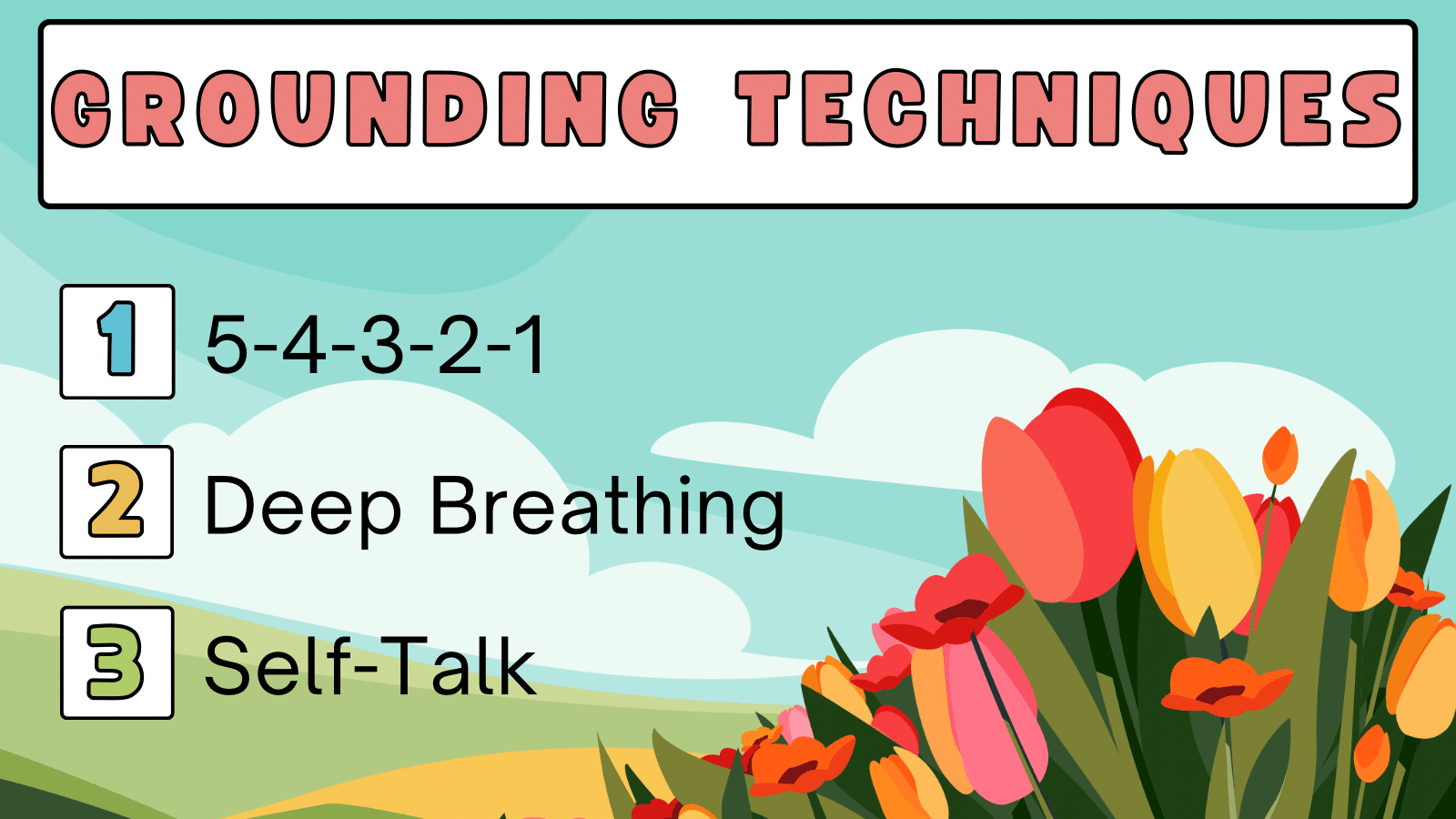
- The 5-4-3-2-1 Grounding Technique
This is one of the most well-known and effective grounding exercises.
How to do it:
- 5 things you can see
- 4 things you can feel
- 3 things you can hear
- 2 things you can smell
- 1 thing you can taste
This technique works by gently guiding your attention through your senses—like walking your mind back home, one step at a time.
- Deep Breathing (Regulating Your Nervous System)
Your breath is one of the fastest ways to calm anxiety.
Try this:
- Inhale slowly for 4 seconds
- Hold for 4 seconds
- Exhale for 6–8 seconds
- Repeat for a few minutes
Longer exhales signal to your body that it’s safe to relax. Think of each breath as a wave washing tension out.
- Temperature Change (Reset Your System)
Sudden temperature shifts can quickly interrupt anxiety.
Examples:
- Splash cold water on your face
- Hold an ice cube in your hand
- Step outside into fresh air
This technique works almost like hitting a reset switch on your nervous system.
- Physical Grounding (Reconnect with Your Body)
When anxiety pulls you into your thoughts, your body can help bring you back.
Try:
- Press your feet firmly into the ground
- Hold onto a solid object (like a chair or table)
- Stretch or gently move your body
- Notice the weight of your body in the chair
These actions remind you that you are here, in your body, in this moment.
- Mental Grounding Techniques
These techniques engage your thinking brain to shift focus away from anxiety.
Examples:
- Count backward from 100 by 7s
- Name all the animals you can think of
- List categories (e.g., types of fruit, cities, colors)
- Recite something memorized (lyrics, a poem, affirmations)
This is like giving your brain a structured task so it stops spiraling.
- Self-Talk and Reassurance
Sometimes, your inner voice needs to become a steady, calming presence.
Try saying:
- “I am safe right now.”
- “This feeling will pass.”
- “I can handle this moment.”
Your thoughts can either fuel anxiety or soften it—grounding helps you choose the latter.
- Creating a Grounding Toolkit
Grounding becomes even more effective when you prepare ahead of time.
Consider including:
- A calming scent (like lavender)
- A textured object (stress ball, stone, fabric)
- A comforting photo or note
- Headphones with calming music
Think of it as your personal “calm kit” for difficult moments.
When to Use Grounding Techniques
Grounding techniques can be used:
- During moments of high anxiety or panic
- Before stressful events (like meetings or appointments)
- After emotional triggers
- As part of your daily self-care routine
The more you practice when you’re calm, the easier it becomes to use them when you need them most.
Anxiety can make the world feel loud, fast, and overwhelming. Grounding techniques offer a way to slow things down and return to yourself—one breath, one sensation, one moment at a time.
You don’t need to use every technique. The goal is to find what works for you and build a small set of tools you can rely on.
And if anxiety continues to feel overwhelming, working with a mental health professional can provide additional support, personalized strategies, and a safe space to explore what you’re experiencing.